A seven-month exhibition at the Byzantine Museum of Nicosia presenting four significant artifacts from the Museum of the History of Armenia, exploring the relationship between Armenian faith, cultural identity, and historical ties to Cyprus. Opens 9 October 2026.
The exhibition 'Faith and Identity - Treasures from the Museum of the History of Armenia' presents four significant artifacts from the Museum of the History of Armenia in Yerevan. It explores the relationship between faith and Armenian cultural identity, as well as the historical and cultural bonds connecting Armenia and Cyprus. The exhibition highlights the role of Armenian churches and monasteries as centers of education, manuscript copying, artistic creation, and knowledge preservation.
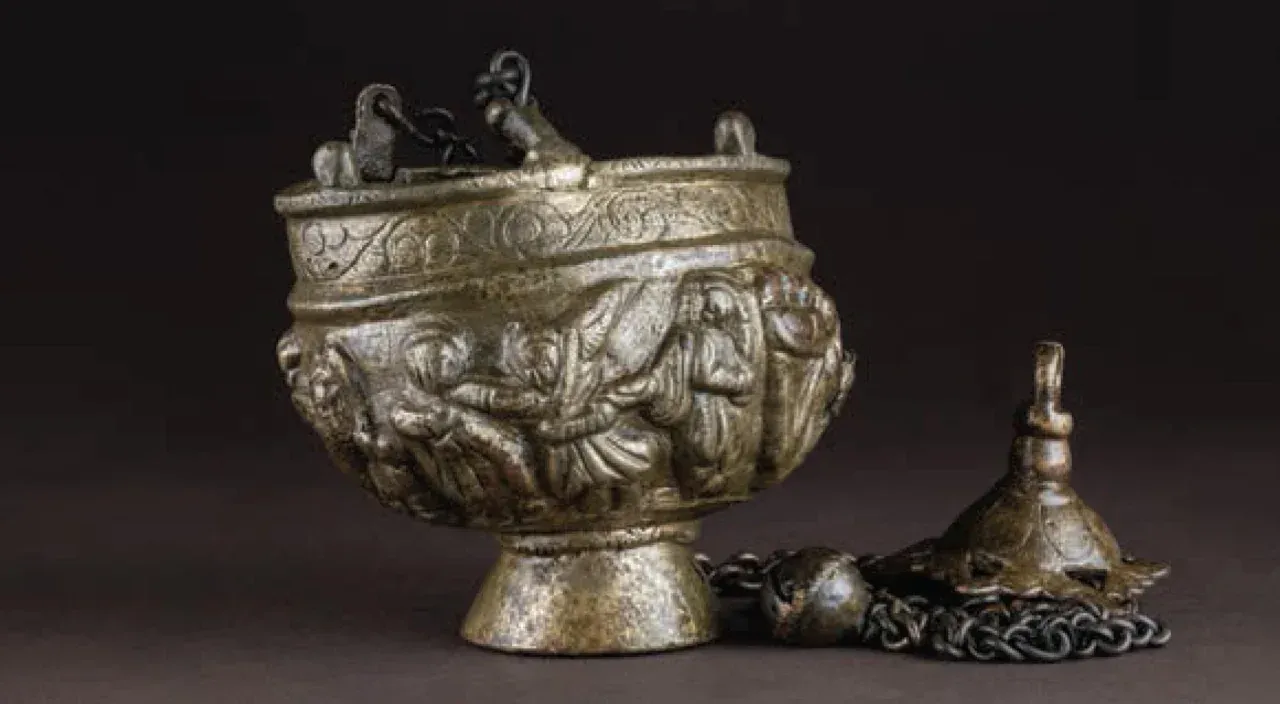
The four artifacts represent different periods of Armenian art and ecclesiastical tradition: a silver pectoral cross (18th century) from the Church of Saints Peter and Paul in Yerevan; a glazed ceramic tile (12th-13th century) from Dvin depicting a crane with a serpent; a silver half-tram coin (1198-1219) of King Leon I of Armenian Cilicia; and a bronze censer (10th-11th century) from the Church of Gagkasén in Ani with scenes of the Annunciation, Nativity, Baptism, Crucifixion, and Resurrection.
An Armenian Gospel manuscript from the Monastery of Saint Makarios on the Pentadactylos, stolen by antiquities smugglers after the 1974 Turkish invasion and taken to Munich. It was repatriated in 2013 and is now housed and displayed in the First Hall of the Byzantine Museum with the consent of the Armenian Archdiocese of Cyprus.
The opening ceremony on Friday, 9 October at 7 p.m. will feature remarks from Ioannis Iliades (Director of the Byzantine Museum), David Pogosyan (Director of the Museum of the History of Armenia), Vartkés Makhteyan (representative of the Armenian religious community in Parliament), Archbishop Gomitas (Armenian Archbishop of Cyprus), Archbishop Georgios (Archbishop of Cyprus), and Inna Torgomyan (Ambassador of Armenia). The ceremony will be conducted on behalf of the President of the Republic by Deputy Minister of Culture Klea Chatzistepanou Papaeliena, followed by a guided tour and reception.
Useful to know
The exhibition opens on Friday, 9 October 2026 at 7 p.m. with an opening ceremony. It runs until 9 April 2027, open Tuesday-Saturday 9:30 a.m.-5 p.m.
Yes. On Saturday, 10 October at 11 a.m., David Pogosyan, Director of the Museum of the History of Armenia, will deliver a lecture about the museum. The lecture is open to the public.
Four significant relics from the Museum of the History of Armenia in Yerevan come to Nicosia for the periodic exhibition "Faith and Identity - Treasures from the Museum of the History of Armenia", presented by the Byzantine Museum of the Archbishop Makarios III Foundation in cooperation with the Armenian museum.
The exhibition opens on 9 October and will run for seven months. According to the Byzantine Museum, it is the first international exhibition with objects from abroad to be hosted in its spaces after its comprehensive renovation.
The exhibition, held under the auspices of the Embassy of the Republic of Armenia in Cyprus and the Armenian Metropolis of Cyprus, seeks to illuminate the relationship between faith and the cultural identity of Armenia, as well as the historical and cultural ties linking Armenia with Cyprus. In Armenian history, ecclesiastical relics, manuscripts, liturgical vessels and other objects are not only evidence of religious life, but also testimonies to the artistic, spiritual and cultural development of different eras.
A significant part of the narrative concerns the role of Armenian churches and monasteries as centers of education, manuscript copying, artistic creation and the preservation of knowledge. The exhibition links this tradition with the Armenian presence in Cyprus and with relics that preserve the memory of the community on the island.
Four objects from the Museum of the History of Armenia
The central feature of the exhibition is four objects representing different periods of Armenian art, ecclesiastical tradition and history.
The 18th-century silver pectoral cross (lantsakhats) comes from the Church of Saints Peter and Paul in Yerevan, which was destroyed in 1930. The cross was saved and is now an important testament to Armenian spiritual heritage. It is decorated with carnelian and white glass.
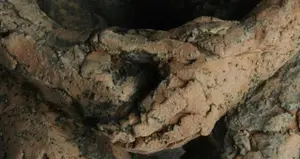
The glazed ceramic plate from Dvin, dating to the 12th-13th century, is an example of the developed urban culture and ceramic art of medieval Armenia. At its center is depicted a crane holding a snake, while a lily is rendered on its wing, giving the composition a particular symbolic character.
The silver half-dram coin of King Leo I of Armenian Cilicia (1198-1219) links political power with Christian iconography. The front side shows the enthroned king with an orb and lily, while the reverse shows a lion holding a patriarchal cross, accompanied by the inscription "By the will of God".
Finally, the bronze censer of the 10th-11th century, found during excavations of the Church of Gagkasén in Ani, is one of the most important surviving examples of medieval Armenian ecclesiastical metalwork. Its spherical body depicts scenes of the Annunciation, the Nativity, the Baptism, the Crucifixion and the Resurrection, while the base shows the Theotokos.
The four objects, although they come from different periods and cultural contexts, together form a unified narrative about the material and spiritual heritage of Armenia and the enduring relationship between faith, cultural identity and tradition.
The Gospel Book of Saint Makarios
The Armenian manuscript tradition and the historical presence of Armenians in Cyprus hold a special place. Among the most important testimonies is the Armenian Gospel Book of the Monastery of Saint Makarios in Pentadaktylos, which was stolen by antiquities smugglers after the Turkish invasion of 1974 and transferred to Munich. The manuscript was repatriated in 2013 and is today kept and exhibited in Room A of the Byzantine Museum, with the consent of the Armenian Metropolis of Cyprus.
The exhibition is further complemented by three Gospels from the 18th and 19th centuries with gilded covers, and by a Patriarchal Encyclical of Catholicos Michael of Sis Cilicia from 1847, from the Armenian Metropolis of Cyprus.
Of particular interest are the three Gospels printed in Constantinople in 1796, in Etchmiadzin in 1710 and in Jerusalem in 1868. Their covers bear witness to the cultural and artistic exchanges between Cyprus, Armenia and the wider Christian world. On one of them, the silver-gilt cover appears to have been made in Cyprus, following the technique of Ioannis Kornaros.
The Armenian presence in Cyprus is a long-standing chapter in the island's history, with ties that were strengthened during the Frankish and Venetian periods through trade, population movements and cultural networks. After the Armenian Genocide, Cyprus became a place of refuge for thousands of refugees, while churches, monasteries, schools, archives and works of art helped preserve the memory and identity of the community.
Opening and lecture
The opening will take place on Friday 9 October at 7 p.m. Greetings will be delivered by the director of the Byzantine Museum, Ioannis Iliades, the director of the Museum of Armenian History, Davit Poghosyan, the representative of the Armenian religious group in Parliament, Vartkes Mahdessian, the Archbishop of the Armenians of Cyprus, Komitas, the Archbishop of Cyprus, Georgios, and the Ambassador of Armenia, Inna Torgomyan. The opening will be performed, on behalf of the President of the Republic, by the Deputy Minister of Culture, Klea Hadjistephanou Papaellina. A guided tour and a reception will follow.
The following day, Saturday 10 October at 11 a.m., the director of the Museum of Armenian History, Davit Poghosyan, will give a lecture about the museum. The lecture is open to the public.
Where and when
Nicosia, Byzantine Museum (22430008), Opening: Friday 9 October, 7 p.m. Duration: until 9 April 2027 (Tuesday-Saturday 9.30 a.m.-5 p.m.)